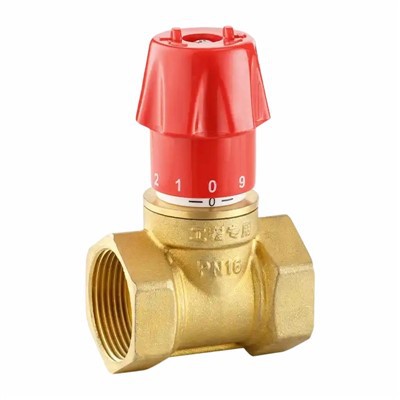


Brass Three-way Ball Valve
The Cost of Choosing the Wrong 3‑Way Valve
A 3‑way valve looks simple: three ports, one handle, 90° rotation. But choosing the wrong port type creates field problems that are expensive to fix:
If you need T‑port but buy L‑port:
- You want to water two zones simultaneously, but only one zone gets water
- You want to mix hot and cold water, but the valve only switches between them
- You install the valve, test it, and it doesn't work - reorder, reinstall, double labor cost
If you need L‑port but buy T‑port:
- You want to switch between heating and bypass, but the valve splits flow to both
- Water goes where it shouldn't, creating system imbalance
- You need an additional shut‑off valve to close one outlet
The result: Wrong valve = wasted money + delayed project + frustrated installer.
| Wrong Choice | Consequence |
|---|---|
| T‑port needed → bought L‑port | Only one outlet works at a time |
| L‑port needed → bought T‑port | Flow leaks to the wrong outlet |
| No decision matrix | Trial and error, wasted inventory |
| Both types in stock | Higher inventory cost |
This guide helps you make the right choice before you order.
Product Overview
Our brass three‑way ball valve is a multi‑directional flow control fitting engineered for plumbing and HVAC circulating systems. Two distinct ball core variants are available: T‑port and L‑port, each built for unique piping tasks.
The T‑port model supports both fluid mixing and flow splitting. It combines two incoming streams into one outlet, or diverts a single feed into two separate circuit branches. The L‑port variant acts purely as a flow diverter, switching flow between isolated pipeline loops without mixing media.
Built with a full‑bore flow path, this brass ball valve keeps internal pressure drop to a minimum across the whole valve body. An anti‑seize valve stem paired with high‑performance PTFE sealing seats delivers stable, repeatable switching performance. Its nickel‑plated forged brass body delivers strong corrosion resistance, supporting long‑term operation within heating, cooling and domestic water piping networks.
This compact 3‑way brass ball valve works as an all‑in‑one flow diverter and mixing unit. It replaces bulky tee‑joint assemblies, cuts down extra pipe fittings and simplifies overall system layout. It fits perfectly for residential heating, radiator circuits, underfloor heating, chilled‑water air‑conditioning and light‑duty pipelines carrying non‑aggressive fluids.
| Feature | T‑Port | L‑Port |
|---|---|---|
| Flow between | Any port to any port | Two ports only |
| Flow to both outlets | Yes (simultaneous) | No (one at a time) |
| Mixing capability | Yes (2 in → 1 out) | No |
| Best for | Diversion, mixing | Switching, bypass |
| Handle positions | 3 positions (0°, 45°, 90°) | 2 positions (0°, 90°) |
Key Product Advantages
-
Versatile T‑Port & L‑Port Flow Switching
Two ball core options satisfy different piping requirements. T‑port enables flow mixing & splitting; L‑port achieves loop diversion. 90‑degree manual handle operation allows simple, fast switching among multiple pipeline circuits.
-
Full‑Bore Structure for Low Pressure Loss
The full‑bore inner channel matches the nominal pipe diameter. Flow resistance is greatly reduced, cutting pump workload and saving energy consumption for circulating heating or cooling systems.
-
Anti‑Seize Stem & Reliable Sealing
Valve stem fitted with dual O‑rings and supporting bearing structure, lowering friction torque. Effectively prevents sticking caused by scaling and mineral crystallization. PTFE valve seats ensure tight shut‑off, resisting leakage over frequent cycles.
-
Corrosion‑Resistant Nickel‑Plated Forged Brass Body
Forged brass main body with surface nickel plating provides strong anti‑corrosion performance. Works stably under humid environment, hot water circulation and long‑time continuous running.
-
Compact Integrated Tee‑Shape Design
All‑in‑one tee structure reduces quantity of extra connectors and adapters. It shortens installation time, saves space inside equipment room and improves overall system reliability by lowering potential leak points.

| Feature | Description |
|
Place of origin |
China |
|
Brand name |
Yunnl |
|
Product Name |
Brass Three-way Ball Valve |
| Body Material | Forged Brass, Nickel‑Plated Surface |
| Seat & Seal | PTFE + NBR O‑rings |
| Thread Standard | BSP Thread (Optional NPT) |
| Nominal Pressure | PN16 (1.6 MPa) |
| Working Temperature | 5℃ ~ 90℃ |
| Operation Mode | Manual 90° lever handle |
| Flow Type | T‑Port (Mixing & Diversion) / L‑Port (Diversion Only) |
| Applicable Medium | Cold & hot water, glycol mixed circulating fluid, other non‑corrosive liquid |
|
Size |
DN15-DN50 |
|
Minimum Order Quantity |
1 |
|
Price |
Negotiable |
|
Packing |
Yunnl standard packing |
|
Payment Terms |
L/C, D/A, D/P, T/T, Western Union,MoneyGram |
|
Delivery Time |
15 Days |
The Decision Matrix: T‑Port or L‑Port?
-
Three Questions to Ask
| Question | T‑Port | L‑Port |
|---|---|---|
| Do you need both outlets to receive flow at the same time? | Yes → T‑port | No → L‑port |
| Are you mixing two fluids together? | Yes → T‑port | No → L‑port |
| Are you switching between two separate circuits? | No → T‑port | Yes → L‑port |
-
The One‑Sentence Rule
Choose T‑port if you need flow to go to both outlets - together or separately. Choose L‑port if you only need flow to go to one outlet at a time.
-
Quick Reference Table
| Your System Does This | Choose |
|---|---|
| Waters two zones at the same time | T‑port |
| Waters one zone, then switches to another | L‑port |
| Mixes hot and cold water | T‑port |
| Switches between heating and cooling modes | L‑port |
| Splits one pump to two circuits | T‑port |
| Bypasses a filter or chiller | L‑port |
| Distributes flow to multiple branches | T‑port |
| Selects between main supply and backup | L‑port |
Common Mistakes to Avoid
-
Mistake 1: "I'll buy T‑port, it does everything"
Reality: T‑port does everything except switch cleanly between two outlets. When T‑port is in the "middle" position (45°), it sends flow to both outlets. If you need to completely shut off one outlet while the other is open, T‑port cannot do this.
Example: You have one pump and two radiators. You want to send flow to radiator A only, then to radiator B only. If you use T‑port, when you switch from A to B, there is a position where both radiators receive flow simultaneously. This may be acceptable or may cause system imbalance.
If you need a clean switch with no overlap, choose L‑port.
-
Mistake 2: "L‑port is simpler, I'll use it for everything"
Reality: L‑port cannot split flow to both outlets simultaneously. If you want to water two zones at the same time, L‑port will not work.
Example: You have one main supply and two irrigation zones. You want to water both zones at the same time. L‑port can only send flow to one zone at a time - you would need a second valve or a T‑port.
-
Mistake 3: "All 3‑way valves are the same"
Reality: The physical valve looks identical. The internal ball core determines what the valve can do. The wrong internal core means the valve cannot perform the intended function.
Always confirm the port type when ordering.
T‑Port: Detailed Use Cases
Use Case 1: One Pump → Two Zones (Simultaneous)
System: One circulating pump supplies two underfloor heating zones.
T‑port function: Splits flow to both zones simultaneously.
Handle positions:
- 0°: Flow to zone 1 only
- 45°: Flow to both zones (balanced split)
- 90°: Flow to zone 2 only
Why T‑port: You need the option to flow to both zones at the same time.
Use Case 2: Hot + Cold → Mixed Temperature
System: Hot water supply and cold water return mixing for temperature control.
T‑port function: Combines two inlets to one outlet.
Flow path: Hot in + Cold in → Mixed out.
Why T‑port: You need to mix two incoming flows into one outgoing flow. L‑port cannot mix.
Use Case 3: Main Supply → Multiple Branches
System: One main water supply feeding kitchen and bathroom branches.
T‑port function: Distributes flow to multiple branches.
Why T‑port: One valve serves multiple branches. Simple distribution.
L‑Port: Detailed Use Cases
Use Case 1: One Pump → Two Zones (Switched)
System: One circulating pump supplies two zones, but only one zone at a time.
L‑port function: Switches flow between zone 1 and zone 2.
Handle positions:
- 0°: Flow to zone 1 only
- 90°: Flow to zone 2 only
Why L‑port: You need a clean switch - only one zone receives flow at a time.
Use Case 2: Heating Mode → Bypass Mode
System: Radiator circuit with a bypass line for system balancing.
L‑port function: Switches between radiator circuit and bypass.
Flow path: Inlet → Radiators OR Inlet → Bypass.
Why L‑port: You want to switch between two paths, not mix them.
Use Case 3: Main Supply → Backup Supply
System: Water supply with main source and backup tank.
L‑port function: Selects between main supply and backup.
Flow path: Main supply → Outlet OR Backup → Outlet.
Why L‑port: You only need flow from one source at a time.
Application Scenarios by Port Type
T‑Port Applications
| System | Function | Why T‑Port |
|---|---|---|
| Underfloor heating manifold | Split flow to multiple loops | Zones operate simultaneously |
| Solar thermal system | Mix collector and backup water | Two inlets to one outlet |
| Domestic hot water distribution | Supply kitchen + bathroom | One supply to multiple branches |
| Chilled water distribution | Feed multiple fan coil units | Simultaneous cooling |
| Heat pump system | Mix return and supply water | Temperature blending |
L‑Port Applications
| System | Function | Why L‑Port |
|---|---|---|
| Radiator zone control | Switch between radiators | One zone at a time |
| Equipment bypass | Switch between chiller and bypass | Clean on/off switching |
| Filter isolation | Select filter or bypass | No flow overlap |
| Source selection | Main supply or backup tank | One source at a time |
| Changeover systems | Heating or cooling mode | Complete circuit switching |
Installation & Operation
-
Installation
- Confirm port type - T‑port or L‑port matches your system design
- Apply PTFE tape - 3‑5 wraps clockwise on male threads
- Install the valve - Thread into pipeline
- Position the handle - Ensure accessible operation
- Test - Pressurize and check for leakage
-
Operation
T‑port:
- 0°: Flow to one outlet
- 45°: Flow to both outlets (split)
- 90°: Flow to the other outlet
L‑port:
- 0°: Flow to outlet A
- 90°: Flow to outlet B
-
Important Notes
- Do not over‑tighten - Brass threads can crack
- Do not use as a throttle - For on/off and switching only
- Handle position indicates flow path - verify before operation
Quality Assurance
All Yunnl brass valves undergo factory‑wide pressure and leak‑testing before shipment. This three‑way ball valve is engineered for long service life in residential, commercial HVAC and light‑industry piping projects. We support sample testing, bulk wholesale and project orders for plumbing distributors, HVAC contractors and system integrators worldwide.
FQA
Q: What is the difference between T‑port and L‑port three‑way ball valve?
A: T‑port supports both fluid mixing and diversion; L‑port can only switch flow between two outlets and cannot mix two incoming flows.
Q: Can this brass 3‑way ball valve be used for hot heating water?
A: Yes, working temperature ranges from 5℃ up to 90℃.
Q: What thread types are available?
A: Standard BSP thread; NPT thread is available upon request. Size range covers DN15‑DN50.
Q: Is sample order supported?
A: Yes, MOQ is 1 piece for quality evaluation.
Products Summary
Yunnl brass three‑way ball valve provides T‑port and L‑port options for flow diversion and mixing. Full‑bore design brings low pressure loss for circulating HVAC and plumbing systems. Nickel‑plated forged‑brass construction with durable PTFE sealing ensures reliable performance for underfloor heating, air‑conditioning and building water‑supply projects. We offer sizes DN15‑DN50, sample support and 15‑day delivery for global plumbing and HVAC buyers.
Hot Tags: brass three-way ball valve, China brass three-way ball valve manufacturers, suppliers, factory, Brass PPR Three-way Ball Valve, three way brass ball valve, three-way ball valve, brass 3 way valve, 3 4 full port ball valve, 3 way brass ball valve t port