


Hey there! I'm a supplier of brass stop valves, and today I wanna chat about how the valve stem material can really impact the performance of a brass stop valve.
First off, let's understand what a valve stem does. The valve stem is a crucial part of the stop valve. It's the component that connects the handwheel or actuator to the valve disc. When you turn the handwheel, the stem moves up or down, which in turn opens or closes the valve. So, its performance is super important for the overall function of the stop valve.
Now, let's look at different valve stem materials and how they affect the valve's performance.
Stainless Steel Valve Stems
Stainless steel is a popular choice for valve stems in brass stop valves. One of the main advantages is its corrosion resistance. Brass itself is pretty resistant to corrosion, but in some harsh environments, like those with high humidity, chemicals, or saltwater, the valve stem can still be at risk. Stainless steel can handle these conditions much better.
For example, in a coastal area where the air is full of salt particles, a brass stop valve with a stainless - steel stem will last longer. The stainless - steel stem won't rust or corrode easily, which means the valve can keep operating smoothly. It also reduces the risk of the stem seizing up, which could make it difficult to open or close the valve.
Another benefit of stainless - steel stems is their strength. They can withstand higher pressures compared to some other materials. This is really important in applications where the system operates under high pressure. If the stem isn't strong enough, it might bend or break, causing the valve to malfunction.
However, stainless steel isn't perfect. It can be more expensive than some other materials. So, if cost is a major concern, you might need to weigh the benefits against the price.
Brass Valve Stems
Brass valve stems are also commonly used in brass stop valves. The biggest advantage here is the compatibility with the valve body. Since both the valve body and the stem are made of brass, they have similar expansion and contraction rates when the temperature changes. This reduces the risk of leaks due to differential expansion.
For instance, in a heating system where the temperature can vary significantly, a brass stop valve with a brass stem is less likely to develop leaks. The brass stem and the valve body will expand and contract together, maintaining a tight seal.
Brass is also relatively easy to machine. This means that it can be manufactured into the precise shape required for the valve stem. It's also a good conductor of heat, which can be an advantage in some applications where heat transfer needs to be controlled.
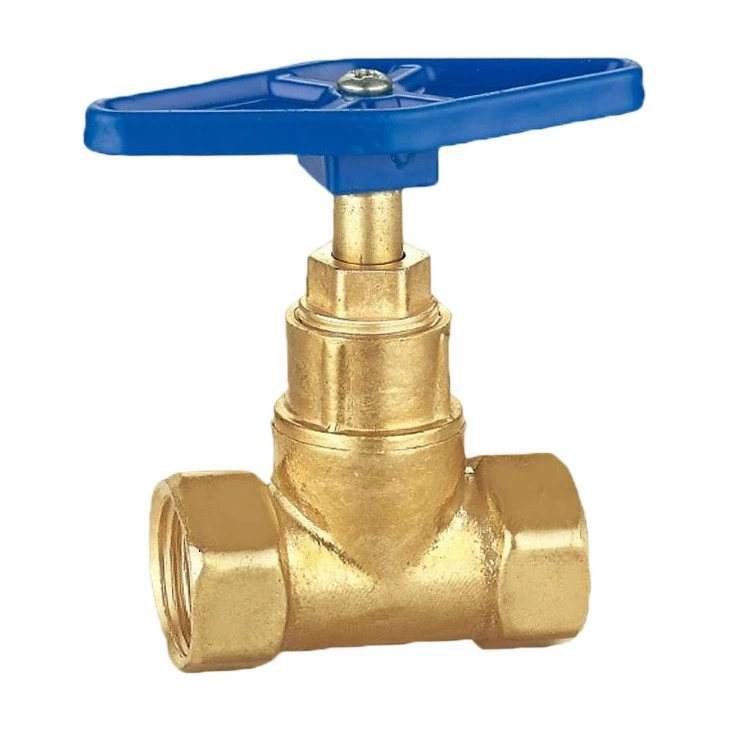

But brass has its limitations. It's not as corrosion - resistant as stainless steel in some extreme environments. In a chemical plant where there are corrosive chemicals in the air or the fluid flowing through the valve, a brass stem might corrode over time.
Alloy Steel Valve Stems
Alloy steel valve stems offer a combination of strength and corrosion resistance. They are often used in high - performance applications. Alloy steel can be heat - treated to achieve different levels of hardness and toughness.
In a high - pressure industrial pipeline system, an alloy steel stem can handle the stress without deforming. It can also resist corrosion in moderately corrosive environments. For example, in a water treatment plant where the water has a certain level of chemicals, an alloy steel stem can provide reliable performance.
However, alloy steel is also more expensive than brass. And it requires more careful handling during manufacturing to ensure its quality.
Plastic Valve Stems
Plastic valve stems are a cost - effective option. They are lightweight and easy to install. In some low - pressure and non - critical applications, plastic stems can work just fine.
For example, in a simple irrigation system for a small garden, a brass stop valve with a plastic stem can be a great choice. The plastic stem is resistant to corrosion from water and some mild chemicals. It's also quiet when the valve is operated, which can be a plus in some situations.
But plastic has its drawbacks. It has limited strength compared to metal stems. It can't handle high pressures or high temperatures. If the system experiences a sudden pressure spike or the temperature rises too high, the plastic stem might break or deform.
Now, let's talk about how the choice of valve stem material can affect the performance of different types of brass stop valves.
Slow - Opening Stop Valve
A Slow - Opening Stop Valve is designed to open gradually to prevent water hammer. The valve stem material plays a crucial role here. If the stem is made of a material that can't handle the repeated movement required for slow opening and closing, it might wear out quickly.
For example, a plastic stem might not be suitable for a slow - opening stop valve in a high - usage application. The constant friction during the slow - opening process could cause the plastic to wear down, leading to a loose fit and potentially a leak. A stainless - steel or alloy - steel stem would be a better choice as they are more durable and can withstand the repeated movement.
Brass Forged Stop Valve
A Brass Forged Stop Valve is known for its strength and durability. The valve stem material should match the high - quality standards of the forged valve body. A brass stem is a good option here because of its compatibility with the forged brass body. It ensures a good seal and reliable operation.
However, if the valve is going to be used in a high - pressure or corrosive environment, a stainless - steel or alloy - steel stem might be more appropriate. These materials can enhance the overall performance and longevity of the brass forged stop valve.
Brass German Y - type Stop Valve
The Brass German Y - type Stop Valve has a unique Y - shaped design that allows for better flow control. The valve stem material affects how well the valve can regulate the flow.
A strong and smooth - working stem is essential for precise flow adjustment. Stainless - steel stems are often a good choice for this type of valve because they can provide the necessary strength and smooth operation. They can also resist corrosion, which is important in applications where the fluid flowing through the valve might be corrosive.
In conclusion, the valve stem material has a significant impact on the performance of a brass stop valve. When choosing a valve, you need to consider the application, the environment, and the budget. As a brass stop valve supplier, I can help you make the right choice based on your specific needs.
If you're in the market for brass stop valves and want to discuss which valve stem material is best for your application, don't hesitate to reach out. We can have a detailed chat about your requirements and find the perfect solution for you.
References
- Valve Handbook, 4th Edition, by Robert W. Saunders
- Industrial Valves: Selection and Sizing, by John P. Monahan


