


What is the Pressure Drop Across a Brass Stop Valve?
As a prominent supplier of high - quality brass stop valves, I often receive a multitude of inquiries from clients, engineers, and industry enthusiasts about various aspects of these essential components. One question that keeps coming up is: "What is the pressure drop across a brass stop valve?" In this blog post, I aim to delve deep into this topic, offering insights and explanations to help you understand this critical parameter.
Understanding Pressure Drop
Before we discuss the pressure drop across a brass stop valve, it's important to understand what pressure drop is in general. Pressure drop, often denoted as $\Delta P$, is the difference in pressure between two points in a fluid flow system. It occurs due to various factors such as friction, changes in flow direction, and restrictions in the flow path. In a piping system, pressure drop is an inevitable phenomenon, and minimizing it is crucial for maintaining efficient operation.
When a fluid (either liquid or gas) flows through a brass stop valve, it encounters resistance. This resistance causes a reduction in pressure from the inlet to the outlet of the valve. The pressure drop across the valve is a measure of this resistance and can have significant implications for the overall performance of the system.
Factors Affecting Pressure Drop Across a Brass Stop Valve
Valve Design
The design of the brass stop valve plays a crucial role in determining the pressure drop. Different types of stop valves, such as Brass Regulating Stop Valve, Concealed Globe Valve, and Brass Forged Stop Valve, have distinct internal geometries. For example, a globe valve typically has a more tortuous flow path compared to a straight - through valve design. As the fluid has to change direction multiple times while passing through a globe valve, it experiences more friction and a higher pressure drop.
Valve Size
The size of the brass stop valve also affects the pressure drop. A smaller valve has a smaller flow area, which means that the fluid has to flow through a more restricted space. This results in an increase in the fluid velocity and, consequently, a higher pressure drop. Conversely, a larger valve provides a larger flow area, allowing the fluid to flow more freely and reducing the pressure drop.
Flow Rate
The flow rate of the fluid passing through the valve is directly related to the pressure drop. As the flow rate increases, the velocity of the fluid also increases. Higher fluid velocities lead to more intense friction between the fluid and the valve walls, as well as more significant turbulence. This causes the pressure drop across the valve to increase. Therefore, in systems with high flow rates, careful selection of the valve size and type is necessary to manage the pressure drop effectively.
Fluid Properties
The properties of the fluid, such as viscosity and density, have a significant impact on the pressure drop. Viscous fluids, like oil, offer more resistance to flow compared to less viscous fluids such as water. As a result, the pressure drop across a brass stop valve is generally higher when handling viscous fluids. Similarly, denser fluids require more energy to be moved, leading to an increased pressure drop.
Measuring Pressure Drop Across a Brass Stop Valve
To accurately measure the pressure drop across a brass stop valve, pressure sensors are typically installed at the inlet and outlet of the valve. These sensors measure the pressure at each point, and the difference between the two readings gives the pressure drop. In some cases, the pressure drop can also be calculated using theoretical formulas, especially for well - defined valve designs and flow conditions.
For laminar flow (a smooth, non - turbulent flow regime), the Hagen - Poiseuille equation can be used to estimate the pressure drop in a pipe or a valve. However, in most practical applications, the flow through a stop valve is turbulent, and more complex equations or empirical correlations are required. Manufacturers often provide pressure drop curves for their valves, which show the relationship between the flow rate and the pressure drop under specific conditions. These curves are based on experimental data and can be used to select the appropriate valve for a given application.
Importance of Controlling Pressure Drop in a System
Controlling the pressure drop across a brass stop valve is essential for several reasons. Firstly, excessive pressure drop can lead to a decrease in the overall efficiency of the system. When the pressure drop is high, more energy is required to pump the fluid through the system, resulting in increased operating costs.
Secondly, a large pressure drop can cause problems such as cavitation in liquid systems. Cavitation occurs when the pressure of the liquid drops below its vapor pressure, leading to the formation of vapor bubbles. These bubbles can collapse violently, causing damage to the valve and other components in the system.
Finally, maintaining an appropriate pressure drop is crucial for ensuring the proper functioning of downstream equipment. If the pressure drop is too high, the pressure available at the downstream end may be insufficient to operate other devices, such as pumps or actuators, effectively.
Selecting the Right Brass Stop Valve to Minimize Pressure Drop
As a supplier of brass stop valves, I understand the importance of helping customers select the right valve for their specific needs. When choosing a valve to minimize pressure drop, the following factors should be considered:

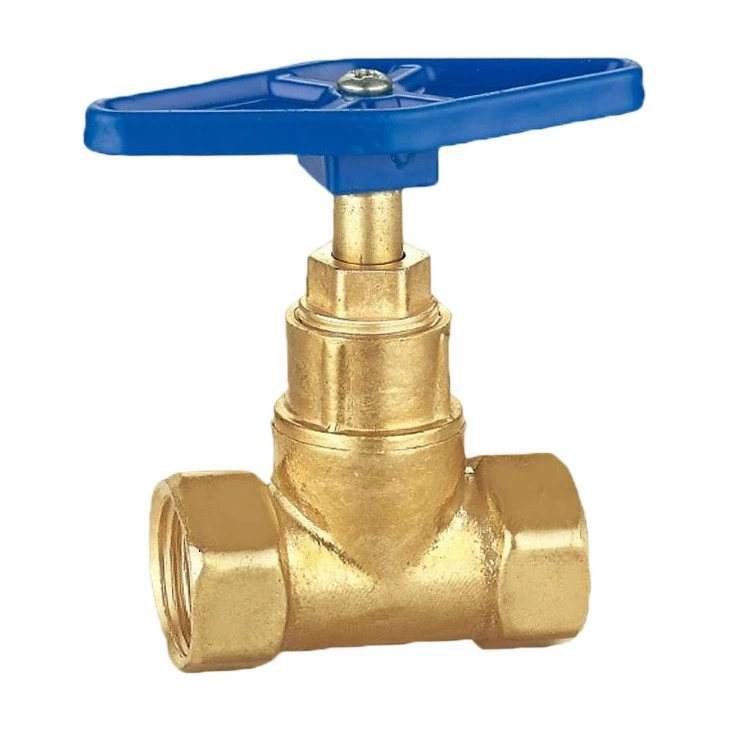
- Valve Type: Opt for valve designs with a more straightforward flow path, such as straight - through valves, when possible. These valves generally have lower pressure drops compared to valves with more complex geometries.
- Valve Size: Select a valve size that is appropriate for the expected flow rate. A valve that is too small will cause a high pressure drop, while a valve that is too large may be more expensive and take up more space.
- Flow Conditions: Consider the flow rate, fluid properties, and operating pressure of the system when choosing a valve. Consult the manufacturer's pressure drop curves to ensure that the valve can handle the expected flow conditions with an acceptable pressure drop.
Conclusion
In conclusion, the pressure drop across a brass stop valve is a critical parameter that affects the performance and efficiency of a fluid flow system. It is influenced by various factors, including valve design, size, flow rate, and fluid properties. By understanding these factors and taking appropriate measures to control the pressure drop, such as selecting the right valve and maintaining proper flow conditions, you can optimize the performance of your system and reduce operating costs.
If you are in need of high - quality brass stop valves and want to discuss your specific requirements to ensure the best pressure drop management for your system, don't hesitate to reach out. We are here to assist you in making the right choice and providing you with top - notch products and services.
References
- Crane Technical Paper No. 410, "Flow of Fluids Through Valves, Fittings, and Pipe"
- Perry's Chemical Engineers' Handbook, 8th Edition


